What is Native Advertising – How It Works for E-commerce Businesses?
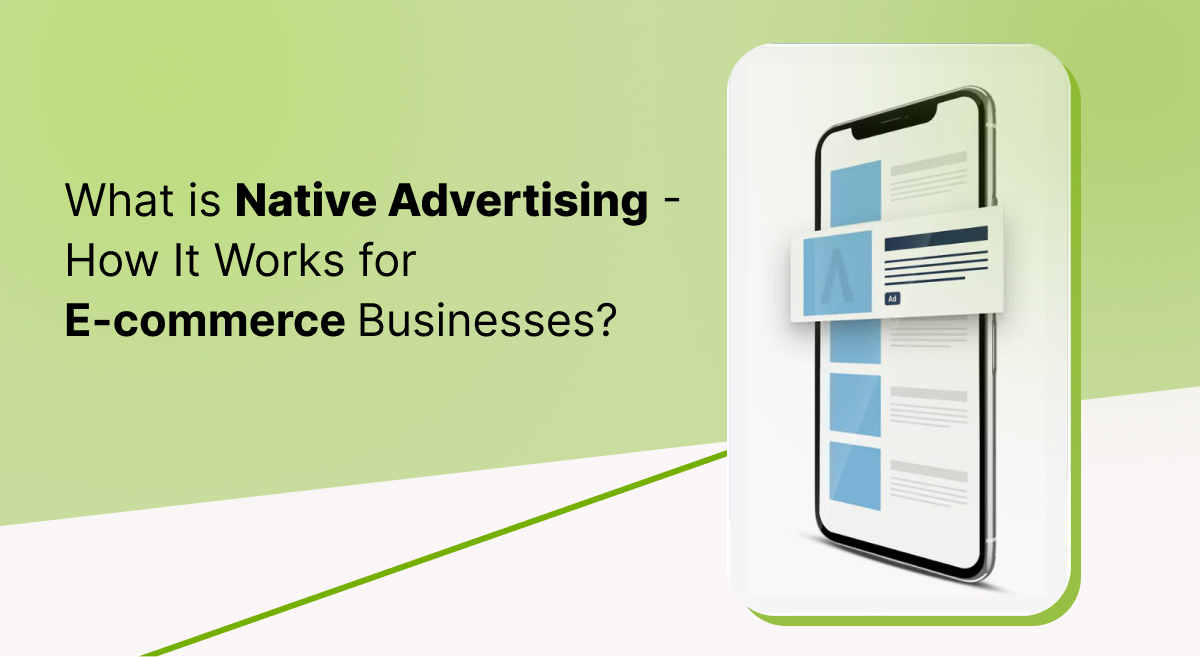
Native advertising is a type of paid advertisement that naturally resembles the publication’s editorial content but is actually paid for by advertisers to promote their products. These ads match the look and feel of the media format and fit natively on the web pages.
Unlike those frustrating banner, display, and pop-up ads, native advertising doesn’t really disrupt the user experience and interaction with the webpage. These ads are created from several metadata elements, including headline, thumbnail, content URL, description, and more. Although it may look puzzling, creating native ads isn’t that hard, especially when you are clear about the targeted audience, message, and goal of the campaign.
When the efforts of search and social marketing run short, native advertising can help drive traffic, leads, engagement, and even conversions. Still wondering how it works for e-commerce businesses? Let’s find out what native advertising is, how it works, and why marketers use it to boost their brands.
What is Native Advertising?
Native advertising is a type of paid advertising where ads are placed naturally into the content and the platform’s format so that it doesn’t affect the user experience. It converts ads into natural extensions of the platform on which they appear. For instance, you might have seen a life insurance infographic in your favorite health-related article or a delicious cookie recipe placed naturally on your favorite cooking website.
Native ads often feature as recommended content on the page, sometimes appear on the top, middle, or bottom of the article. The best example of native advertising is in-feed ads that appear on your news feed on social networks. The captions for such ads include words like “recommended by,” “suggested post,” “recommended for you,” or “sponsored,” which adds an element of trust.
Today, native ads have proven their worth in boosting brand awareness and work effectively with other primary pillars of marketing strategy. Here are some stats highlighting the prominence of native advertising on e-commerce brands.
- The spending on native ads in the US is expected to grow by 12%, reaching $98.59 billion. (Source: eMarketer)
- 68% of users trust native ads and even click on them, compared to 55% for social media ads. (Source: Outbrain)
- Native advertising holds around 20 to 60 percent engagement rates and has 3X higher retention rates. (Source: MarTech)
How Does Native Advertising Work?
Native advertising is a simple yet effective way for e-commerce businesses to promote their products. It makes advertising look genuine and natural. Here’s how it works for e-commerce businesses:
First, native ads match the look and feel of the platform they appear on, like a blog, social media feed, or news site. For example, if you’re scrolling through a lifestyle blog, a native ad for your e-commerce store’s skincare products might look like a regular article, not a flashy banner. This makes users more likely to engage because it doesn’t disrupt their browsing.
Second, these ads focus on providing value. Instead of just saying “Buy Now,” they offer helpful information, like a guide on choosing the right product or a story about how your brand solves a problem. This builds trust with potential customers, encouraging them to check out your store.
Third, native ads are targeted to the right audience. Using data like interests, location, or browsing habits, platforms ensure your ad reaches people likely to buy. For instance, if you sell fitness gear, your ad could appear to users who read about workouts. They often include a soft call-to-action, like “Learn More” or “Shop Now,” leading users to your e-commerce site without feeling pushy.
Types of Native Advertising with Examples
Native advertising is classified into different types, and your choice greatly depends on your campaign goals. But first, we need to understand the different types of native ads and how each works:
1. In-Feed Ads
These appear in social media feeds or news sites, looking like regular posts. For example, if you sell handmade jewelry, your ad might show up in a user’s Instagram feed as a post with a photo and a short story about your brand. It has a “Shop Now” button, but it feels like part of the feed.
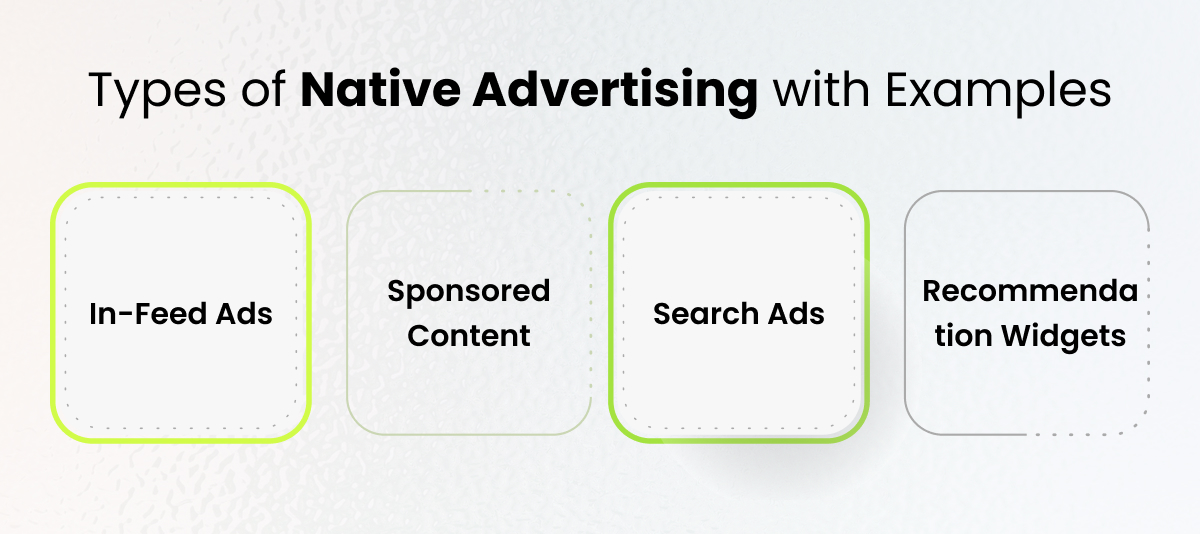
2. Sponsored Content
These are articles or videos created to promote your product while offering value. Suppose you sell organic teas. You could sponsor an article on a health blog titled “5 Benefits of Herbal Teas” that mentions your brand and links to your store. It reads like a helpful guide, not an ad.
3. Search Ads
These appear at the top of search results but match the look of regular results. For instance, if you sell running shoes, your ad could appear when someone searches “best running shoes” on Google, blending in with other listings but labeled as “sponsored.”
4. Recommendation Widgets
These show up as “You Might Like” or “Recommended for You” sections on websites. If you sell pet supplies, your ad for dog toys might appear at the bottom of a pet care blog, looking like a suggested article.
Benefits of Native Advertising for E-commerce Businesses
Native advertising has emerged as a boon for e-commerce businesses, offering unique benefits that drive growth. Here are the key advantages.

Increases Customer Engagement
Native ads blend seamlessly into platforms like social media or blogs, looking like regular content instead of disruptive ads. For example, if you sell eco-friendly clothing, a native ad on a sustainability blog might share a story about your brand’s mission, encouraging readers to click through to your store. This natural integration makes customers more likely to engage because it feels relevant and non-intrusive.
Unlike banner ads, which users often ignore, native ads capture attention by aligning with the user’s interests, leading to higher click-through rates and more visits to your e-commerce site, ultimately boosting your sales potential.
Builds Trust and Credibility
Native ads focus on delivering value through helpful content, not just selling products. For instance, if you sell kitchen gadgets, a sponsored article on “Top 10 Cooking Hacks” that subtly features your tools can position your brand as trustworthy.
Customers appreciate useful information, making them more likely to view your business positively. This trust encourages them to explore your e-commerce store and make purchases. Unlike traditional ads that feel pushy, native ads create a connection by offering solutions or insights, offering long-term customer loyalty, and improving your brand’s reputation in a competitive market.
Targets the Right Audience Effectively
Native advertising uses data to show ads to people most likely to buy. For example, if you sell pet products, your ad can appear on pet care blogs or social media feeds of pet owners. This precise targeting ensures your marketing budget is spent efficiently, reaching customers already interested in your niche.
By appearing in the right context, native ads increase the chances of clicks and conversions, driving more traffic to your e-commerce store. This focused approach helps small businesses compete with larger ones by connecting directly with their ideal audience, maximizing sales opportunities.
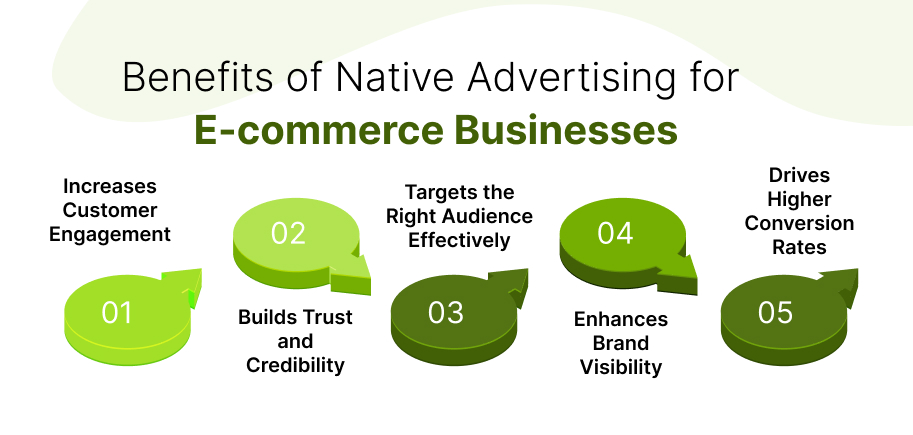
Enhances Brand Visibility
Native ads place your brand where your audience already spends time, like blogs or social media, increasing exposure. For example, if you sell fitness supplements, a native ad on a health website can introduce your brand to fitness enthusiasts. This visibility helps more people discover your e-commerce store without the annoyance of pop-up ads.
By appearing in trusted environments, your brand gains recognition and stays top-of-mind. This consistent exposure builds awareness over time, encouraging potential customers to visit your site and explore your products, ultimately driving more sales.
Drives Higher Conversion Rates
Native ads guide customers to your store subtly, using soft calls-to-action like “Learn More” or “Shop Now.” For instance, if you sell skincare, a native ad on a beauty blog can highlight your product’s benefits, leading readers to your site.
This gentle approach feels less pushy, making customers more likely to convert. Native ads create a positive experience, encouraging purchases. This higher conversion rate means more sales for your e-commerce business, making native advertising a cost-effective way to grow revenue.
How to Create Native Ads?
Creating native ads is simple, and you can one by following the simple steps below:
Step 1: Know Your Audience
Understand who your customers are. If you sell fitness gear, target people interested in workouts. Use data like their interests or browsing habits to ensure your ad reaches the right people. This makes your ad more relevant and increases clicks to your e-commerce site.
Step 2: Create Valuable Content
Make your ad helpful, not just sales-focused. For example, if you sell skincare products, write a short article like “5 Tips for Glowing Skin” that subtly mentions your products. This builds trust and encourages customers to visit your store without feeling pressured.
Step 3: Match the Platform’s Style
Design your ad to look like the platform’s content. If it’s for a blog, use a similar tone and layout. For Instagram, create a visually appealing post with a casual vibe. This seamless blend makes your ad feel natural, not like an ad.
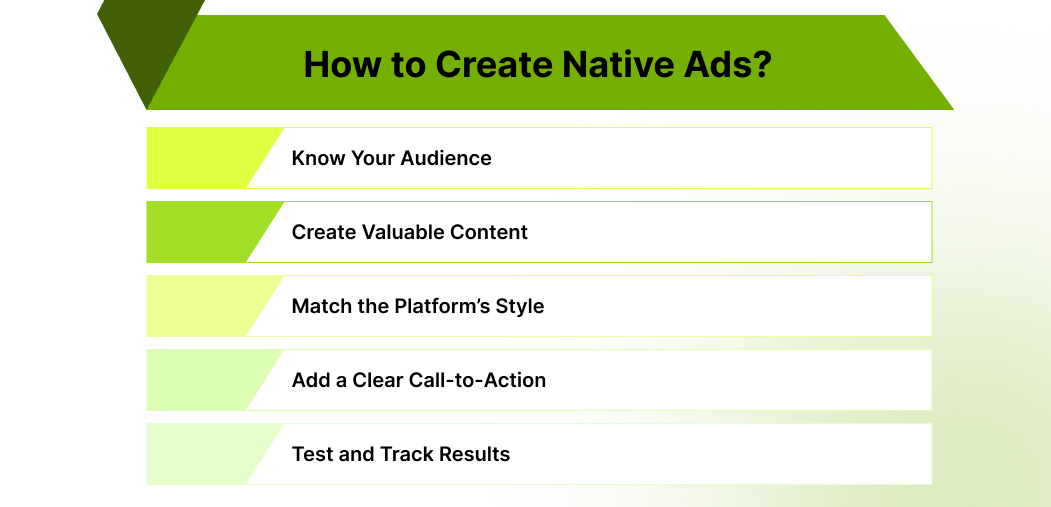
Step 4: Add a Clear Call-to-Action
Include a subtle prompt like “Shop Now” or “Learn More” to guide customers to your store. Keep it friendly to avoid being pushy. For instance, a pet supply ad could say, “Discover fun toys for your dog!” with a link to your site.
Step 5: Test and Track Results
Run your ad on platforms like Google or social media, then check how it performs. See which ads get more clicks or sales and adjust your approach to improve results.
How to Measure the Success of Native Ads?
While native ads are great for promoting products but how do you know if they are working? Measuring their success helps you understand what’s driving sales and where to improve. Here’s a simple guide to track the success of your native ads.
Track Click-Through Rates (CTR)
CTR shows how many people clicked your ad compared to how many saw it. A high CTR means your ad is engaging. For example, if your ad for fitness gear on a health blog gets lots of clicks, it’s grabbing attention. Most ad platforms, like Google or Instagram, provide CTR data.
Measure Conversion Rates
Conversions happen when someone takes an action, like buying a product or signing up for your newsletter, after clicking your ad. If you sell skincare, track how many clicks from a native ad on a beauty site lead to purchases. Use tools like Google Analytics to see this data. A high conversion rate means your ad is not just attracting clicks but also turning visitors into customers.
Check Engagement Metrics
Engagement shows how people interact with your ad, like time spent reading or shares on social media. For instance, if your ad for pet supplies on a blog gets shared or commented on, it’s resonating with viewers. Platforms like Facebook or Outbrain provide these metrics. High engagement means your ad feels valuable, not pushy.
Evaluate Return on Ad Spend (ROAS)
ROAS measures how much revenue you earn for every dollar spent on ads. If you spend $100 on a native ad for kitchen gadgets and earn $500 in sales, your ROAS is 5:1. Calculate this by dividing total sales from the ad by its cost. A good ROAS shows your ad is cost-effective. If it’s low, refine your targeting or content to boost sales.
Pro Tips to Get the Most Out of Native Advertising
To make your native ads work harder and drive more sales, follow these pro tips.
Focus on Storytelling
Create ads that tell a story about your brand or product. For example, if you sell eco-friendly bags, share a short tale about how your bags help the environment. Stories connect with customers emotionally, making them more likely to visit your store. Keep the tone friendly and relatable to build trust and encourage clicks.
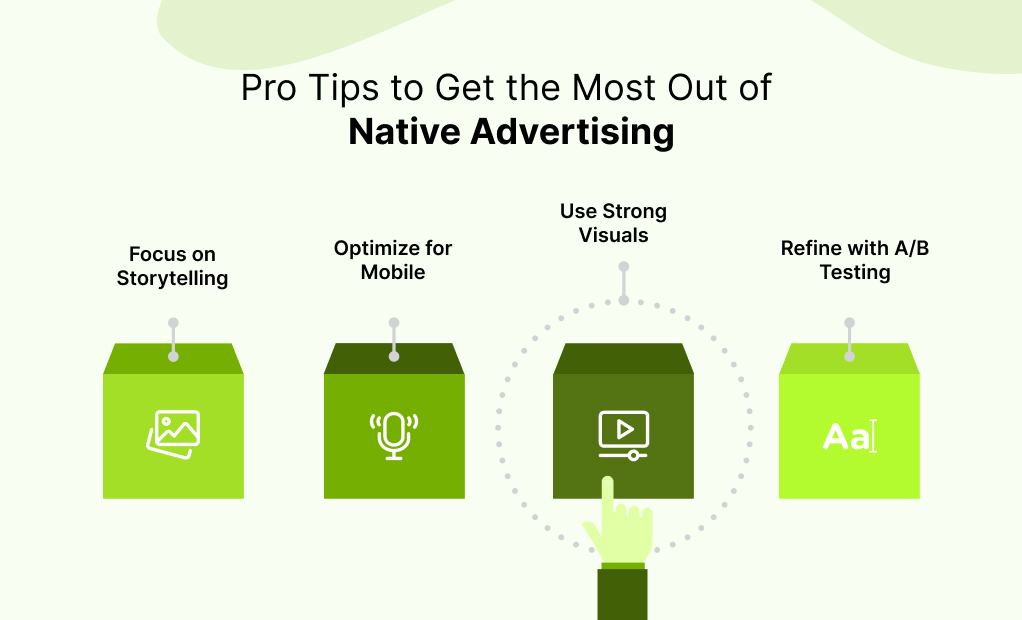
Optimize for Mobile
Most people browse on their phones, so ensure your ads look great on mobile devices. Use clear images and short, punchy text that’s easy to read on small screens. For instance, if you sell fitness gear, make sure your ad’s “Shop Now” button is easy to tap. Test your ad on different devices to ensure it loads fast and looks appealing.
Use Strong Visuals
Eye-catching images or videos grab attention. If you sell jewelry, use high-quality photos of your products in real-life settings, like someone wearing a necklace. Visuals should match the platform’s style to feel natural. This makes your ad stand out while blending in, increasing engagement, and driving traffic to your e-commerce site.
Refine with A/B Testing
Try different versions of your ad to see what works best. For example, test two headlines for your pet supply ad—one focusing on price, another on quality. Run both on a platform like Facebook and track which gets more clicks. Use the results to improve your ads, ensuring better performance and higher sales.
Conclusion
Native advertising is not just a smart, but a customer-friendly way for e-commerce businesses to grow. It helps you reach the right people with ads that feel like part of their favorite blogs or social media, driving engagement, trust, and sales.
If you still need help with advertising, you can contact Malicy App Developers, a company that has been helping e-commerce businesses create seamless, effective ads. Our digital marketing experts can craft ads that connect with customers naturally, boosting your brand and growing your online store effortlessly.
FAQs
Why is Native Advertising Controversial?
Native advertising can be controversial because it blends with regular content, sometimes making it hard for users to recognize it as an ad. This lack of transparency may feel deceptive, causing distrust among customers if not clearly labeled, which can harm an e-commerce brand’s reputation.
What is a Native Style Ad?
A native style ad is an advertisement that matches the look and feel of the platform it appears on, like a blog or social media. For e-commerce, it’s like a product post that blends in, feeling natural and engaging rather than a disruptive ad.
How Effective is Native Advertising?
Native advertising is highly effective for e-commerce because it engages customers naturally, boosting click-through rates and conversions. By blending into content, it builds trust and targets the right audience, often leading to higher sales compared to traditional ads, with better return on investment.
How Do You Spot Native Advertising?
Spot native advertising by looking for labels like “sponsored” or “promoted” on content that blends into a platform. For e-commerce, these ads mimic articles or posts but include subtle brand mentions or calls-to-action, like “Shop Now,” often found on blogs or social media.
When Do You Need Native Advertising?
E-commerce businesses need native advertising to reach customers without being pushy. It’s ideal when you want to build trust, increase brand visibility, or drive sales through engaging, non-intrusive content that blends into platforms where your target audience already spends time, like blogs or social media.
Why is Native Advertising So Popular?
Native advertising is popular because it feels natural, not like traditional ads, making it more engaging for e-commerce customers. It builds trust, targets specific audiences, and drives higher clicks and sales by blending into content, offering a seamless way to promote products effectively.
Top Posts
- 1nopCommerce Review (2026): Is This E-commerce Platform Better Than Shopify?
Shopify.January 2, 2026
- 2Loox Review (2026): Is It The Best Product Review App?
Shopify.December 30, 2025
- 3What is Native Advertising – How It Works for E-commerce Businesses?
Shopify.December 1, 2025
- 4How to Customize a Shopify Theme Without Coding?
Shopify.November 28, 2025
- 5What is Connective eCommerce? Everything You Need to Know in 2025
Malicy App Development.November 25, 2025